Earlier today, US President Donald Trump took to his social media platform to start his annexation nonsense again, claiming that Canada “wants the benefits” of being a US state “without being one”.
Honestly? That is total bullshit.
We have zero desire to become America’s 51st state. Why would we? Let’s take a look at what’s happening across the border right now. Americans are struggling with a mounting national debt that’s spiraling out of control, non-stop mass shootings, endless foreign entanglements like the forever war in Iraq, and high inflation that is making basic groceries unaffordable for millions of American families.
As David Cochrane wisely pointed out on CBC’s Power & Politics: “America isn’t the way it is because he’s president. He’s president because America is the way it is.”
We don’t want any part of their chaos. What we want a trading partner that lives up to the agreements that he signed!
Why Prime Minister Mark Carney Walked Away
On Friday night, Prime Minister Mark Carney made the tough call to walk away from trade negotiations in Washington. The Trump administration slapped a 50 per cent tariff on over $28 billion (CAD) worth of Canadian goods—everything from softwood lumber and steel to wine and hockey sticks. That’s on top of the already crushing tariffs on steel, aluminium, autos and lumber.
In response, Prime Minister Carney announced that Canada is retaliating with dollar-for-dollar counter-tariffs starting the Tuesday after Labour Day (September 8, 2026), targeting U.S. steel, dairy, appliances, and electronics.
In his address to the country, Carney laid out exactly why Canada had to put its foot down: “We cannot accept what they’ve offered, and we will not give what they’ve asked.”
Carney pointed out that the U.S. keeps changing its excuses for tariffs—blaming everything from dairy quotas to Canadian provincial liquor policies and even Canadian wildfire smoke. As the PM bluntly put it, Canada realized that when it comes to Washington, “sometimes its signature was written in pencil.”
For a deeper look at the Prime Minister’s announcement, you can watch Prime Minister Mark Carney’s full remarks on CBC News.
Protecting French Language, Canadian Culture, and Sovereignty
What made this proposed deal completely toxic wasn’t just the math—it was an attack on our identity as a country.
During the final hours of negotiations, U.S. officials tried to force Canada to scrap our protections for the French language and Canadian culture. They demanded an end to federal subsidies for French-language arts, targeted French online media, and even tried to kill requirements for bilingual labels on store products.
The Prime Minister stood firm: “We were not prepared to compromise on our sovereignty, the protection of the French language, and our culture. To our American colleagues, let us be clear: for my government and for Canada, these issues were never on the table, even though the United States tried until the very last minute.”
Provinces Stand United: “A Bad Deal for Canada”
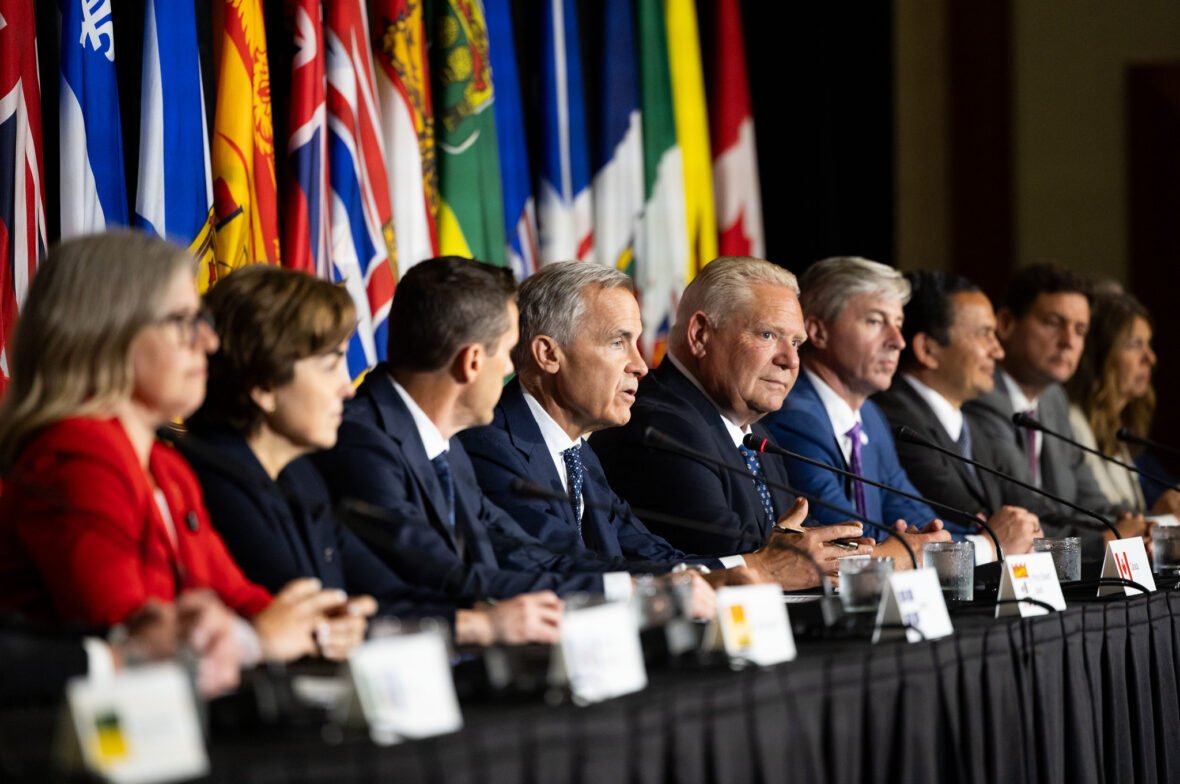
The White House thought high tariffs would divide us, but it did the exact opposite. Premier after premier backed Ottawa’s play to walk away.
- Ontario: Premier Doug Ford didn’t hold back, stating: “I’m glad he didn’t sign that deal because it was a bad deal… It was a bad deal for Ontario. It was a bad deal for the auto sector, the steel sector and the manufacturing sector.”
- British Columbia: Premier David Eby warned that the U.S. demands would reduce Canada to “the economic equivalent of the 51st state,” adding that “the U.S. administration cannot be trusted.” Eby also refused to put American alcohol back on B.C. shelves while Canadian forest products face unfair U.S. levies.
- Manitoba: Premier Wab Kinew urged Canadians to stay strong: “Donald Trump won’t be there forever… We should be prepared to duke it out for two years. And then hopefully sanity will return to America.”
- Quebec: Premier François Legault commended Ottawa for rejecting terms that threatened Quebec’s cultural sovereignty and economic autonomy.
Major US outlets like The New York Times and CNBC note that these tariffs will backfire on American consumers through higher prices, while CNN reports that rising costs of living could create political headaches for Republicans ahead of the midterms.
How You Can Take Action: Buy Canadian and European
We don’t have to wait for politicians to solve this. Every single dollar we spend is a vote for the kind of economy we want.
If you want to support Canadian workers and avoid American products, check out resources like Made in Canada Directory and community groups like Buy Canadian First.
Here are quick everyday swaps you can make:
1. Groceries & Food
- Instead of U.S. Produce & Goods: Choose fresh Canadian produce (Ontario tomatoes, B.C. berries), local Canadian dairy, and domestic pantry staples. Shop at your local farmer’s market!
- Instead of U.S. Imports: Try high-quality European specialty items (Italian olive oil, French cheeses, Spanish canned seafood).
2. Beer, Wine & Spirits (I am looking at you Alberta and Sasktchewan)
- Instead of California Wine & Kentucky Bourbon: Buy local Canadian wines (VQA Niagara or Okanagan), Canadian rye whisky, or local craft beers.
- European Alternatives: Choose French, Italian, or Spanish wines, and Irish or Scotch whiskies.
3. Travel & Vacation
- Instead of U.S. Trips: Explore Canada! Take a trip to Montreal, hike in British Columbia, or visit the Maritimes.
- European Alternatives: If you want an international trip, fly straight to Spain, Portugal, France, or Italy.
4. Tech & Streaming
- European Alternatives: Swap YouTube for European music options, or support Canadian independent media and public broadcasting like CBC Gem.
As Prime Minister Carney said, these are “small acts of solidarity repeated millions of times that make a statement: we are masters of our destiny.”
Let’s stand strong, support local businesses, and keep building Canada strong. How are you fighting back? Tell me in the comments!
Photo by the Province of British Columbia on Flickr.